Skip to main content
  Add Elite Elevators as preferred


Table of Contents
Choosing a home lift is more than the technology that moves you between floors. The way you enter and exit the cabin can also influence everyday convenience, available space and how naturally the lift fits into your home. This is why door configuration deserves careful consideration, particularly when homeowners are comparing different residential lift options.
Sliding and swing doors each offer a different approach to accessing the cabin. While sliding doors can provide a streamlined entry experience and make efficient use of the surrounding space, swing doors may suit certain layouts where simplicity and design flexibility are priorities. The right choice depends on factors such as the available landing area, cabin configuration, household requirements and the overall layout of the property.
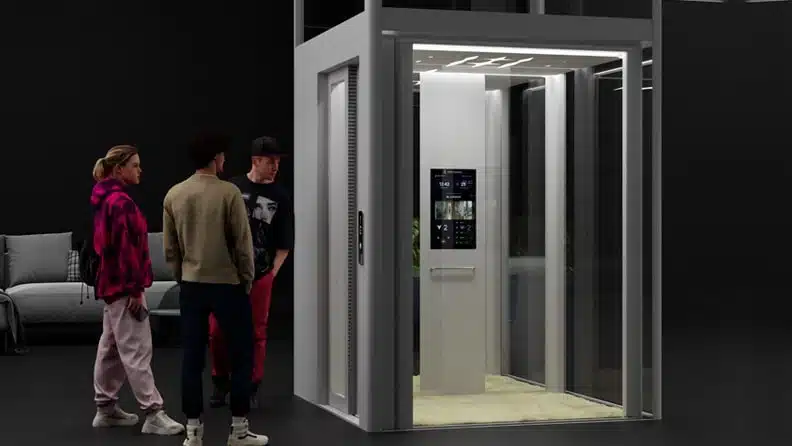
As smart home elevators become more focused on combining technology with practical usability, homeowners are paying closer attention to details that affect daily interaction with the lift. Among these, home lift doors can influence accessibility, movement around the landing and the visual integration of the lift with the interiors.
Understanding the differences between these options can make the decision easier. From space requirements and operation to safety considerations and aesthetics, this guide explores how sliding and swing home elevators doors compare and what homeowners should consider before selecting the right configuration for their residence.
How Does The Two Mechanisms Of Smart Home Elevators Work?
Swing doors are hinged and open in an arc, like a room door. On the Elite Elevators E200, swing landing doors come standard as a steel blind painted in RAL 9010 with a stainless steel Techno handle, with a Modern handle available as an option. The X200 and X200 Plus use panoramic glass swing doors with 600–900 mm openings. Because the door is a single leaf on hinges, the panel can be large, glazed and visually generous.
Sliding doors travel laterally into a pocket beside the opening. The E200 and E300 both support sliding doors up to 900 mm; the E300 offers automatic sliding doors; and the X400 Mark Ⅱ runs automatic operation throughout its configuration.
Folding doors sit in between, concertinaing on the cabin side. They need no landing arc and less pocket space than a slider, making them a useful compromise in tight installations — available on the E200 and standard cabin configurations.
The E200’s door interlock system prevents movement unless doors are securely closed, and the E300’s mechanism keeps doors locked throughout travel, opening only when the cabin has stopped at a designated floor. Every model is certified to EN 81-41 under the European Machinery Directive 2006/42/EC.
What Are The Home Lift Doors Specification Across the Elite Elevators?
| Specification | E200 | E300 CogBelt | X200 / X200 Plus | X400 Mark Ⅱ |
| Landing door options | Swing or sliding door, up to 900 mm | Swing or automatic sliding | Panoramic glass swing | Automatic |
| Cabin door options | Folding or sliding, up to 900 mm | Swing or automatic sliding | Manual swing | Automatic |
| Standard landing finish | Steel blind, RAL 9010; skinplate | Skinplate | Panoramic glass | Per configuration |
| Headroom, no cabin doors (concrete shaft) | 2300 mm | 2500 mm existing shaft | 2300 mm | — |
| Headroom, sliding cabin doors | 2450 – 2500 mm | — | — | — |
| Certification | 2006/42/EC, EN 81-41 | 2006/42/EC, EN 81-41 | EN 81-41 | EN 81-20, EN 81-50 |
The headroom rows are the ones to read twice. Moving from a doorless cabin to sliding cabin doors on the E200 raises the required shaft top height from 2300 mm to 2450–2500 mm in a concrete shaft — roughly 150–200 mm. In a retrofit with a tight floor-to-ceiling height on the top level, that single figure can decide the question before any other consideration.
Why Swing Home Elevators Doors Are The Better Choice?
Swing doors are still the best choice in many Malaysian installations, for reasons that go beyond cost.
Headroom: As the table shows, a swing landing door with a doorless or folding cabin configuration needs the least shaft top height of any arrangement. Where the top floor has a low slab-to-slab dimension, this is often the deciding factor.
Large glazed panels: A panoramic glass swing door — available in smokey grey, opaline, smokey satin or half-reflecting finishes — presents an unbroken pane rather than a divided slider. In a hallway you pass through daily, it reads as joinery rather than equipment.
Powered components: A hinge, a handle and a certified interlock have less to fail across twenty years than a motorised operator with a track and drive belt.
Lower cost per landing: Straightforwardly, on a four or six-stop installation the saving multiplies.
When Do Sliding Doors Earn Their Cost In Home Elevators From Elite Elevators?
- Landing arc: This is the single strongest argument. In narrow corridors, against a stair, or where the landing is genuinely tight, a sliding door is what makes the installation work.
- Automatic operation: Sliding doors are the natural fit for powered operation, and this is where the smart specification comes together. The X400 Mark Ⅱ allows door timing to be adjusted via mobile app, useful where an older family member needs longer to enter. The X200 Plus offers the same through its app integration.
- Speed: The X400 Mark Ⅱ runs a gearless belt drive at up to 1.0 m/s with travel to 21,000 mm. On a lift that fast, manual doors at every landing become the bottleneck — and the X400’s Sports Mode goes further still, with doors opening and closing without prompting.
- Hands-free entry: For a wheelchair user, or anyone whose hands are full, a powered sliding door is the difference between independence and needing help.
The E200 offers an EVO automatic door opener and closer as an option on swing landing doors — powered convenience on a swing layout, without moving to full sliders or paying the headroom penalty.
Frequently Asked Questions
- What door types are available on home lifts in Malaysia?
Elite Elevators offers swing, sliding and folding configurations. The E200 supports folding or sliding cabin doors and swing or sliding landing doors up to 900 mm; the E300 offers swing or automatic sliding doors; the X200 series uses panoramic glass manual swing doors with 600–900 mm openings; and the X400 Mark Ⅱ runs automatic doors, with up to 12 doors per lift across the E Series and X400 Mark Ⅱ. - Do sliding home lift doors need more space than swing doors?
They need more headroom but no landing arc. On the Elite Elevators E200, sliding cabin doors raise required shaft top height from 2300 mm to 2450–2500 mm in a concrete shaft, while swing doors need roughly 900 mm of clear arc space in front of each landing. Which constraint matters more depends on your site. - Are swing home elevators doors as safe as sliding doors?
Yes. Safety is governed by the interlock rather than the mechanism. The Elite Elevators E200 includes a door interlock system preventing movement unless doors are securely closed, and the E300 keeps doors locked during travel, opening only at a designated floor. Both are certified to EN 81-41 under the European Machinery Directive 2006/42/EC. - Can home lift doors be automated without switching to sliding?
Yes. The Elite Elevators E200 offers an optional EVO automatic door opener and closer for swing landing doors, providing powered operation while retaining the swing layout and its lower headroom requirement. - What finishes are available for home lift doors?
Landing doors can be finished in skinplate, steel blind in RAL 9010, stainless steel satin, RAL standard or RAL metallic. Panoramic glass is available in smokey grey, opaline, smokey satin and half-reflecting finishes, with stainless steel handles in Techno or Modern styles. The X200 and X400 from Elite Elevators offer 16 RAL colours across standard, metallic and textured finishes.