 Skip to main content
  Add Elite Elevators as preferred


Table of Contents
- Why Does Property Type Affect Home Lift Cost?
- Home Lift Cost Considerations for Condos
- Home Lift Cost Considerations for Bungalows
- Home Lift Cost Considerations for Villas
- How Elite Elevators Models Map to Different Property Types
- Home Lift Cost Comparison by Property Type
- What Other Factors Influence Home Lift Price in Malaysia that Buyers Should Expect?
- How Should Homeowners Approach Getting an Accurate Quote?
- Are There Affordable Home Lift Options Regardless of Property Type?
- Common Mistakes When Budgeting for a Home Lift
- Conclusion
- Frequently Asked Questions
Home lift cost isn’t a single fixed figure — it varies significantly depending on the type of property it’s being installed in. A condo, a bungalow, and a villa each present different structural conditions, space constraints, and installation requirements, all of which influence the final cost. Understanding these differences helps set realistic expectations before requesting quotes.
Homeowners researching this topic often start by looking for a single average figure, only to find that quotes vary widely once site-specific factors come into play. That variation isn’t arbitrary — it’s directly tied to the structural realities of each property type.
Why Does Property Type Affect Home Lift Cost?
The core cost drivers for home lifts — cabin size, number of stops, structural work, and installation complexity — are all directly shaped by the type of property involved. A condo unit spanning two internal floors has very different requirements from a three-storey bungalow or a sprawling villa with multiple wings.
Home Lift Cost Considerations for Condos
Condos present a specific set of challenges and advantages:
Limited floor space often means compact, space-efficient lift designs are prioritised over larger cabin sizes.
Strata approval requirements can add time to the process, since building management or joint management bodies often need to approve installation plans.
Fewer stops required, typically just connecting two internal levels in a duplex-style unit, which can help manage overall project scope.
Shared structural considerations mean installation needs to account for the building’s existing architecture, which is more restrictive than a standalone landed property.
Limited flexibility on placement, since the unit’s existing layout usually dictates where a lift can realistically go, unlike a standalone property where more positioning options exist.
Home Lift Cost Considerations for Bungalows
Bungalows, being standalone properties, generally offer more installation flexibility:
More placement options since there’s no shared building structure to accommodate, giving more freedom in choosing the lift’s exact location.
Moderate stop requirements, usually connecting two to three floors depending on the property’s layout.
Existing structure considerations still apply, particularly for older bungalows where the original construction didn’t anticipate a lift being added later.
Retrofit feasibility is generally strong, particularly with self-supporting, pit/deep pit-free lift designs suited to existing homes.
Garden or exterior space options, in some cases, allowing for installations that wouldn’t be possible within a more space-constrained condo unit.
Home Lift Cost Considerations for Villas
Villas tend to have the most variables affecting cost, given their typically larger scale:
Larger cabin size options are often more feasible given the additional available space, which can increase both comfort and cost.
More stops required, particularly in multi-storey villas with basement levels, ground floors, and upper floors all needing connection.
Higher customisation demand, since villa owners often want the lift’s finish to match a broader, more elaborate interior design scheme.
Greater installation flexibility, given more available space for the shaft or self-supporting structure location.
Potential for multiple lift installations, in larger villas with distinct wings, which is a cost consideration unique to this property type.
How Elite Elevators Models Map to Different Property Types
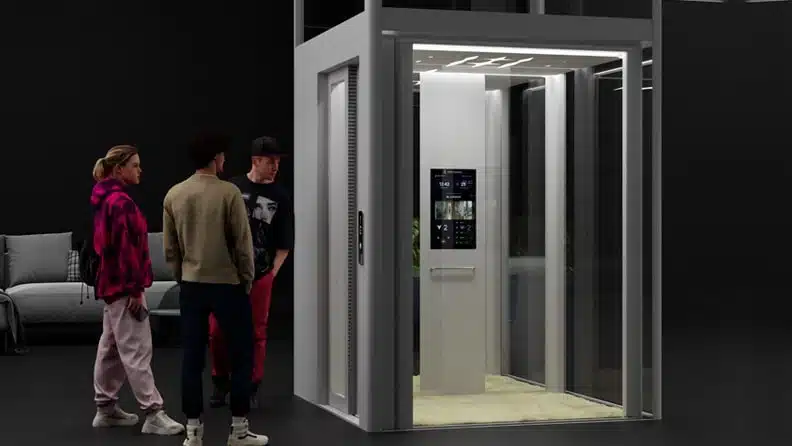
Elite Elevators’ range illustrates this property-type distinction well. The compact X200 and X200 Plus, with their smaller footprint and 100mm pit requirement, tend to suit condo units and space-constrained bungalows where every square foot matters. The X400 and X400 Mark II, offering a larger cabin (up to 1500mm x 1500mm) and no deep pit or machine room requirement at all, are better suited to bungalows and villas with more available space and a desire for a more premium ride experience. Hydraulic options like the E200 and E300 sit in between, offering flexibility for properties where a moderate pit is acceptable but a full gearless system isn’t required. None of this changes the underlying advice — a site assessment specific to your property remains essential — but it does illustrate how model choice and property type are closely linked from the outset.
Home Lift Cost Comparison by Property Type
| Property Type | Typical Stops Needed | Space Constraints | Approval Considerations |
| Condo | 2 (duplex-style) | High | Strata/JMB approval often required |
| Bungalow | 2–3 | Moderate | Generally more flexible |
| Villa | 2–4+ | Low | Greatest design and placement flexibility |
What Other Factors Influence Home Lift Price in Malaysia that Buyers Should Expect?
Beyond property type, several universal factors affect home lift price in malaysia quotes:
- Drive system chosen (hydraulic versus gearless mechanisms)
- Cabin finish level and customisation
- Number of stops and total travel height
- Installation complexity specific to the site
- Smart features and control system options
How Should Homeowners Approach Getting an Accurate Quote?
Regardless of property type, the most reliable path to an accurate cost figure is a proper site assessment rather than a generic online estimate. This matters even more for condos, where strata rules can affect what’s technically permitted, and for villas, where the sheer number of variables makes generic pricing almost meaningless. Bungalow owners, while generally facing fewer structural restrictions, should still confirm site-specific factors like existing wall placement and available electrical capacity before assuming a quote will be straightforward.
Are There Affordable Home Lift Options Regardless of Property Type?
Yes. Affordable home lifts exist across property types, typically through simpler finish packages, standard cabin sizes, and fewer smart features, rather than compromising on core safety systems. Safety certification and structural integrity shouldn’t be treated as negotiable, but finish level and additional features often can be scaled to fit different budgets, whether the property in question is a compact condo or a large villa.
Common Mistakes When Budgeting for a Home Lift
Assuming all property types face the same cost drivers: A condo’s strata approval process, for example, doesn’t apply to a standalone bungalow, but adds real time and consideration to condo projects.
Not accounting for approval timelines in strata properties: This can extend the overall project timeline significantly if not planned for early.
Underestimating villa customisation costs: Larger, more elaborate finish requests can meaningfully affect the total project cost beyond the base lift price.
Comparing quotes without matching property type context: A quote for a bungalow installation isn’t directly comparable to a condo quote, given the different structural and approval considerations involved.
Assuming a single “average” home lift price applies universally: Given how much property type affects the final figure, a generic average is rarely useful for actual budgeting.
Conclusion
Home lift cost genuinely differs by property type, driven by structural conditions, space availability, and approval requirements unique to condos, bungalows, and villas. Understanding these distinctions before requesting quotes helps homeowners set realistic budget expectations and ask more informed questions during the consultation process. Whether you’re working with a compact condo or a sprawling villa lift project, the underlying cost drivers remain consistent even as the specific numbers vary considerably from property to property.
Frequently Asked Questions
-
Is a home lift more expensive in a condo than a bungalow?
Not necessarily more expensive, but condos often involve additional considerations like strata approval, which can add time and complexity to the process.
-
What affects home lift cost the most?
Cabin size, number of stops, drive system type, and installation complexity are the primary cost drivers across all property types.
-
Are there affordable home lift options for smaller properties?
Yes, affordable home lifts are available through simpler finish packages and standard cabin sizes without compromising core safety features.
-
Do villas need more expensive home lifts than bungalows?
Villas often have more stops and greater customisation demand, which can increase cost, but this depends on the specific project scope.
-
Does a condo need approval before installing a home lift?
Often yes, strata or joint management body approval is commonly required before installation can proceed.
-
How can I get an accurate home lift price for my property type?
A proper site assessment specific to your property type is the most reliable way to get an accurate cost estimate, rather than relying on generic figures.
Nur Syahirah Imani
Helpful article with practical information. The explanations are clear and easy to follow.
Nur Rania
I found this guide helpful. It provides useful information for homeowners who are still exploring their lift options.
Ikhwan Rosli
Interesting article. The information about home lift planning is useful and gives homeowners several important points to consider.
Huda Maisarah
Thanks for sharing this article. It gives a good overview of residential lifts and the planning involved.
Nur Maisarah
The explanations are clear and provide a good starting point for residential lift research.