 Skip to main content
  Add Elite Elevators as preferred


Table of Contents
- Is It Physically Possible to Relocate a Residential Lift?
- What Does the Relocation Process Involve?
- What Factors Affect Whether Relocation Makes Sense?
- Residential Lift Relocation: What to Check Beforehand
- How Does Relocation Compare to Buying New?
- Timing Considerations for a Move
- Common Mistakes When Considering Relocation
- Conclusion
- Frequently Asked Questions
Investing in a residential lift is a significant decision, so it’s natural to wonder what happens if you move house before you’ve had the chance to fully benefit from it. Can a residential elevator actually be relocated, or is it a fixed, one-time installation? The answer depends on the type of system, but in many cases, relocation is genuinely possible.
This question comes up more often than people expect, particularly among homeowners who’ve invested in a quality lift and are reluctant to simply leave it behind for the next occupant, or who are downsizing but still need mobility support at their next property.
Is It Physically Possible to Relocate a Residential Lift?
In many cases, yes. Whether relocation is practical depends heavily on the specific system type, its mounting method, and how the original shaft or structure was built.
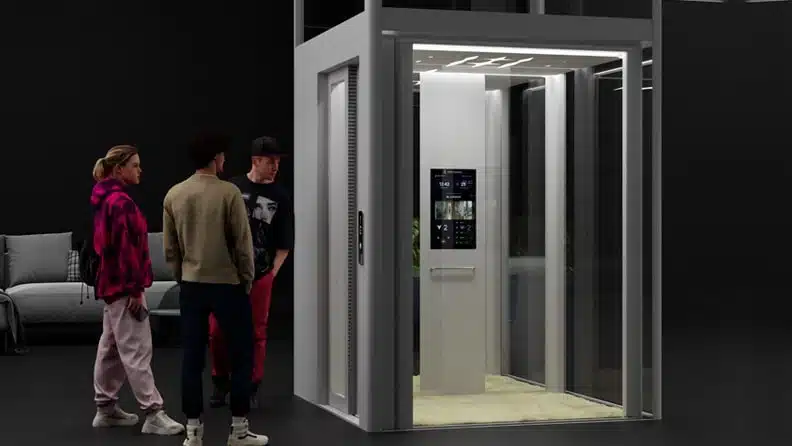
Self-supporting structures — lifts that don’t rely on the building’s own walls for structural support — are generally easier to disassemble and reinstall elsewhere, since they weren’t integrated into the existing construction in a way that ties them permanently to the property.
Built-in shaft systems — where the lift was constructed as part of the building’s structure — are considerably harder to relocate, since removing them may involve significant structural work.
This distinction is the single biggest factor determining whether relocation is realistic for your specific residential lifts setup. It’s worth having this conversation with a technician early, ideally before you’ve committed to a moving timeline, since the answer directly shapes your broader relocation planning.
What Does the Relocation Process Involve?
- Assessment of the current installation: A technician evaluates how the lift was originally installed and whether components can be safely removed and reused.
- Site assessment at the new property: The new location needs to be evaluated for space, structural suitability, and electrical requirements.
- Disassembly: The cabin, rail system, and mechanical components are carefully removed.
- Transport and reinstallation: Components are transported and reinstalled at the new property, following the same certification and safety standards as a new installation.
- Recommissioning and testing: The system is tested thoroughly before being returned to regular use, just as it would be for a brand-new unit.
Each of these steps carries its own timeline, and skipping ahead — for example, disassembling before the new site has been properly assessed — can create costly delays if the components don’t end up fitting the new space as expected.
What Factors Affect Whether Relocation Makes Sense?
Age and condition of the unit: An older system nearing the end of its service life may not be worth relocating compared to a fresh installation.
Compatibility with the new home’s layout: The new property needs sufficient space and structural suitability matching the original design.
Relocation cost versus new installation cost: Depending on the system, relocation isn’t always significantly cheaper than a new unit, particularly if extensive site work is needed at the new property.
Warranty implications: Some warranties may be affected by relocation; checking this before proceeding avoids unexpected gaps in coverage.
Component wear during disassembly: Some parts, particularly seals and certain electrical connections, may need replacing during reinstallation regardless of how carefully the original unit is handled.
Residential Lift Relocation: What to Check Beforehand
| Consideration | Why It Matters |
| Structural type (self-supporting vs built-in) | Determines whether relocation is realistically feasible |
| Age of the unit | Older units may not justify relocation costs |
| New property’s space and structure | Must accommodate the same footprint and safety requirements |
| Warranty terms | Relocation may affect existing coverage |
| Recertification requirements | Safety standards must be re-verified after reinstallation |
What Does Relocation Typically Cost?
Residential elevator cost for relocation depends on distance, disassembly complexity, and whether any components need replacing during reinstallation. In some cases, it’s a meaningful saving compared to a full new installation; in others, particularly with older or heavily built-in systems, a new unit may be more practical. A proper technician assessment, rather than a generic estimate, is the only reliable way to understand home lift price Malaysia homeowners should expect for a relocation project.
It’s also worth factoring in timing costs. A relocation project that stalls because the new site wasn’t properly assessed beforehand can end up costing more in delays and rework than a straightforward new installation would have.
How Does Relocation Compare to Buying New?
For homeowners weighing this decision, it helps to think of it less as “relocate versus not” and more as a genuine cost-benefit comparison against a new unit. A newer, well-maintained self-supporting lift with straightforward disassembly requirements often makes financial sense to relocate. An older built-in system, particularly one nearing the end of its expected service life, frequently doesn’t — the structural work involved in removal can approach or exceed the cost of simply installing fresh equipment at the new property.
Timing Considerations for a Move
Relocation projects take longer than most people initially expect, particularly once site assessments, disassembly, transport, and recommissioning are all accounted for. If mobility needs at the new property are immediate — for example, an elderly family member moving in shortly after the move — it’s worth planning well ahead of the actual move date, rather than assuming the lift can simply be up and running within days of arrival.
Common Mistakes When Considering Relocation
Assuming all lifts are relocatable: Built-in shaft systems often aren’t practical to move without significant structural work.
Skipping a new-site assessment: Assuming the new property will automatically accommodate the same system without checking space and structural fit first.
Overlooking recertification: Safety standards need to be reverified after any reinstallation, not assumed to carry over automatically.
Not comparing relocation cost to new installation cost properly: In some cases, a new unit ends up being the more sensible option once relocation costs are fully accounted for.
Underestimating the project timeline: Relocation typically takes longer than a straightforward new installation, given the additional disassembly and reassessment steps involved.
Conclusion
Relocating a residential lift to a new home is genuinely possible in many cases, particularly for self-supporting systems that weren’t built into the original structure. Whether it makes practical sense depends on the unit’s age, condition, and compatibility with the new property, alongside a fair cost comparison against a new installation. A proper assessment from a qualified technician is the best way to understand whether relocating your residential elevator is the right call, and getting that assessment early gives you the clearest possible picture before committing to a moving timeline.
Frequently Asked Questions
-
Can a residential elevator be moved to a different house?
In many cases, yes, particularly for self-supporting systems not built directly into the original structure.
-
Is it cheaper to relocate a lift than buy a new one?
It depends on the unit’s age, condition, and the complexity of reinstallation; a technician assessment is needed for an accurate comparison.
-
Does relocating a lift affect its warranty?
It can, depending on the manufacturer’s terms, so this should be checked before proceeding.
-
What type of residential lift is easiest to relocate?
Self-supporting systems that don’t rely on the building’s structure for support are generally easier to relocate than built-in shaft systems.
-
Does a relocated lift need to be recertified?
Yes. Safety standards should be reverified after reinstallation, the same as they would be for a new installation.
-
How much does residential lift relocation cost in Malaysia?
Residential lift price Malaysia homeowners can expect for relocation varies based on distance, disassembly complexity, and site requirements at the new property.
Iqbal Danish
Good information and easy to follow. The practical advice is useful for anyone planning a residential lift.
Nur Syahirah
The information was easy to follow and answered several questions I had.
Rayyan Firdaus
Good article with useful insights. It explains several important aspects of residential lift planning.
Arif Zaim
Good read with relevant information. It makes understanding home lift planning much easier.
Syed Arman Hakim
Good information for anyone planning to explore residential lift options.