Skip to main content
  Add Elite Elevators as preferred
Table of Contents
Finding the right small home lifts solution can feel difficult when a Malaysian home has limited space, multiple levels or an existing layout that was never designed for a lift. Homeowners often worry that adding an elevator will mean losing valuable living area, undertaking disruptive construction or choosing a system that does not suit the property. Those concerns are understandable because a residential lift is a long-term decision, and the wrong configuration can create unnecessary cost and inconvenience. The good news is that today’s residential lift options are designed with different home sizes, layouts and lifestyles in mind. With the right site assessment and model selection, homeowners can plan vertical mobility around the home instead of redesigning the entire home around the lift.
Why Small Home Lifts Make Sense in Compact Malaysian Homes
A lift can sound like a luxury reserved for a large bungalow, especially when every square metre of a terrace house, townhouse or compact villa already has a purpose. But the real question is not whether your home is large enough for a lift. It is whether the lift is engineered for residential space.
For Malaysian homeowners, the need is often practical. A parent may want to make daily movement between floors easier for an ageing family member. A young family may be tired of carrying groceries, luggage or children up and down stairs. Others may simply be planning to stay in the same home for many years and want the property to remain comfortable as their needs change.
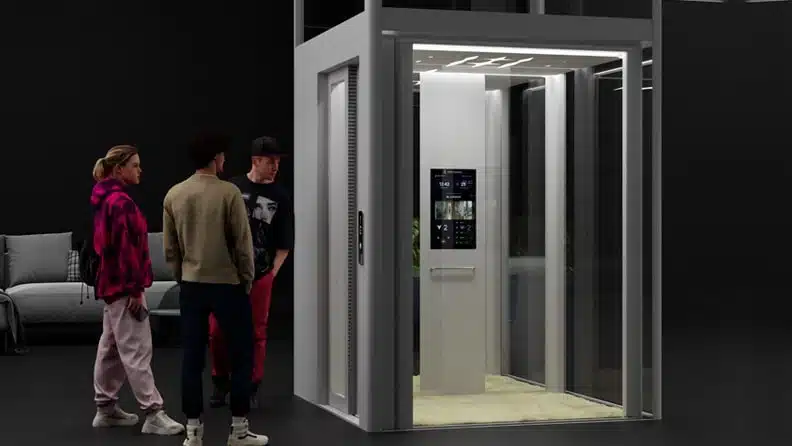
Modern small home lifts can address these needs without turning the installation into a full-scale reconstruction project. The key is to choose a model based on your actual floor plan, travel height, number of stops, cabin requirements and available installation space rather than choosing a lift first and trying to make the house fit around it.
How Compact Home Lifts Save Space
The phrase “compact” should mean more than a smaller cabin. A genuinely space-conscious home lift considers the pit, headroom, machine-room requirement, shaft arrangement, cabin footprint, door configuration and the amount of structural work needed around the installation.
For example, Elite Elevators Malaysia’s range includes models designed with space efficiency in mind. The X400 and X400 Mark II use gearless belt-drive technology and are designed without a traditional machine room; the X400 is also presented with no pit, machine room or headroom requirement in its product positioning. The X400 Mark II offers a 59 mm pit depth without a shaft and 100 mm with a shaft, according to its technical specifications.
The X200 Plus is another option for space-conscious homes. Its published specifications call for a 100 mm pit and 2,300 mm headroom, while its custom-dimension approach allows the lift to be made to suit a home’s measurements.
The E200 uses a shallow approximately 120 mm pit and can also be configured without a pit when a threshold or ramp is used. The E300 has a 140 mm pit requirement, with no pit required where a threshold or ramp configuration applies.
These details matter because losing living space is rarely about the cabin alone. A site assessment should consider the complete installation footprint.
Where to Put Small Home Lifts Without Sacrificing Living Space
Placement is one of the biggest decisions when installing a lift in a compact property. Instead of automatically giving up a bedroom corner or a large section of the living room, homeowners can ask whether an underused part of the plan can become the lift zone.
Common possibilities include a stairwell corner, an open void, an underused entrance area, a hallway junction, or an exterior position where the property and local requirements allow it. Existing homes and new builds should be assessed differently: a new build can plan the lift into the architecture from the beginning, while a retrofit should work around the existing structure and circulation.
The right placement should also make everyday movement intuitive. Ideally, the lift should connect the main living levels without forcing users to walk through awkward areas just to reach it. Door direction, landing clearance, furniture placement, natural light and privacy all deserve consideration.
This is where a professional site visit becomes more valuable than simply comparing brochure dimensions. A lift may technically fit a space but still create an inefficient layout if the landing, door swing or circulation path is overlooked.
Affordable Home Lifts: What Should You Actually Compare?
When homeowners search for affordable home lifts, the lowest purchase price should not be the only measure. A better comparison looks at the total ownership picture: installation requirements, civil work, power requirements, maintenance, safety systems, customisation and the suitability of the lift for the home.
A compact lift can be more economical when it reduces construction complexity. A model that needs extensive structural changes may have a lower equipment price but create a larger overall project cost. Conversely, a well-engineered residential lift with a suitable footprint may deliver better value even when the initial quotation is higher.
Homeowners should also compare capacity and travel requirements. Elite’s X200 and X200 Plus are rated for up to 400 kg and up to four floors, while the E200 supports up to 400 kg and a maximum of six stops. The E300 is rated for up to 400 kg and up to 18,000 mm of travel. The X400 range offers higher-speed performance, with the X400 and X400 Mark II reaching up to 1.0 m/s.
The most affordable home lift is ultimately the one that matches your home without unnecessary specifications or avoidable construction.
Why Choose Elite Elevators Malaysia for a Compact Home?
Elite Elevators Malaysia offers a range of residential lift technologies rather than a single one-size-fits-all solution. That matters because compact homes do not all have the same structural conditions or lifestyle requirements.
The X200 and X200 Plus use hydraulic chain drive technology, with the X200 Plus adding smart features such as a 21-inch Live Board, mobile app connectivity, restricted floor access and instant system alerts. The E200 combines hydraulic technology with Greaseless Rail technology, customisable cabin options and a shallow pit requirement. The E300 uses a patented gearless cogbelt system and supports indoor or outdoor installation. The X400 and X400 Mark II focus on high-speed, gearless belt-drive performance, with the Mark II adding AI, biometric access, a built-in cabin camera, Live Board and mobile app integration.
Across the range, the common goal is to make vertical mobility work with the home rather than forcing the home to become a commercial-style lift environment.
A site assessment is the best starting point. It lets the technical team understand your available space, floors, intended use and installation conditions before recommending a suitable configuration.
FAQs About Small Home Lifts
1. Can a small home lift be installed in an existing Malaysian house?
Yes. Several Elite models are designed for existing homes and retrofit situations, with minimal or flexible civil requirements depending on the model and site.
2. Do small home lifts always require a machine room?
No. The Elite range includes models designed without a traditional machine room. Exact requirements depend on the selected model and installation configuration.
3. Will a home lift take away a lot of living space?
Not necessarily. The final footprint depends on cabin size, shaft arrangement, doors, pit, headroom and the location selected. A site survey is essential before deciding.
4. Are compact home lifts safe for families?
Modern residential lifts can include multiple safety systems. Elite models include features such as automatic rescue systems, overload protection, door safety systems and European safety certifications, depending on the model.
5. What is the best lift for a small house?
There is no universal answer. The right model depends on available space, number of floors, capacity, design preferences, installation conditions and the level of smart functionality required.