Table of Contents
- Why are modern families opting for residential home lifts?
- Is it technically feasible to install home elevators in a finished house?
- Which areas of your home are best suited for small home lifts?
- Can you install home lifts without a traditional shaft or pit?
- How do you select the home elevators that fit your specific needs?
- What safety protocols protect elderly or mobility-impaired users?
- Will the installation of home lifts cause structural damage?
- What is the typical timeline for a retrofit project?
- Are the electricity and maintenance costs of home elevators high?
- What factors influence the final investment for small home lifts?
- How does daily life improve after installing home lifts?
- Conclusion: Is a Home Elevator Right for You?
For many homeowners living in multi-storey properties, there often comes a point where the stairs transition from a daily architectural feature to a physical challenge. Whether due to the natural progression of age, a sudden medical requirement, or the desire to accommodate elderly family members, mobility becomes a priority.
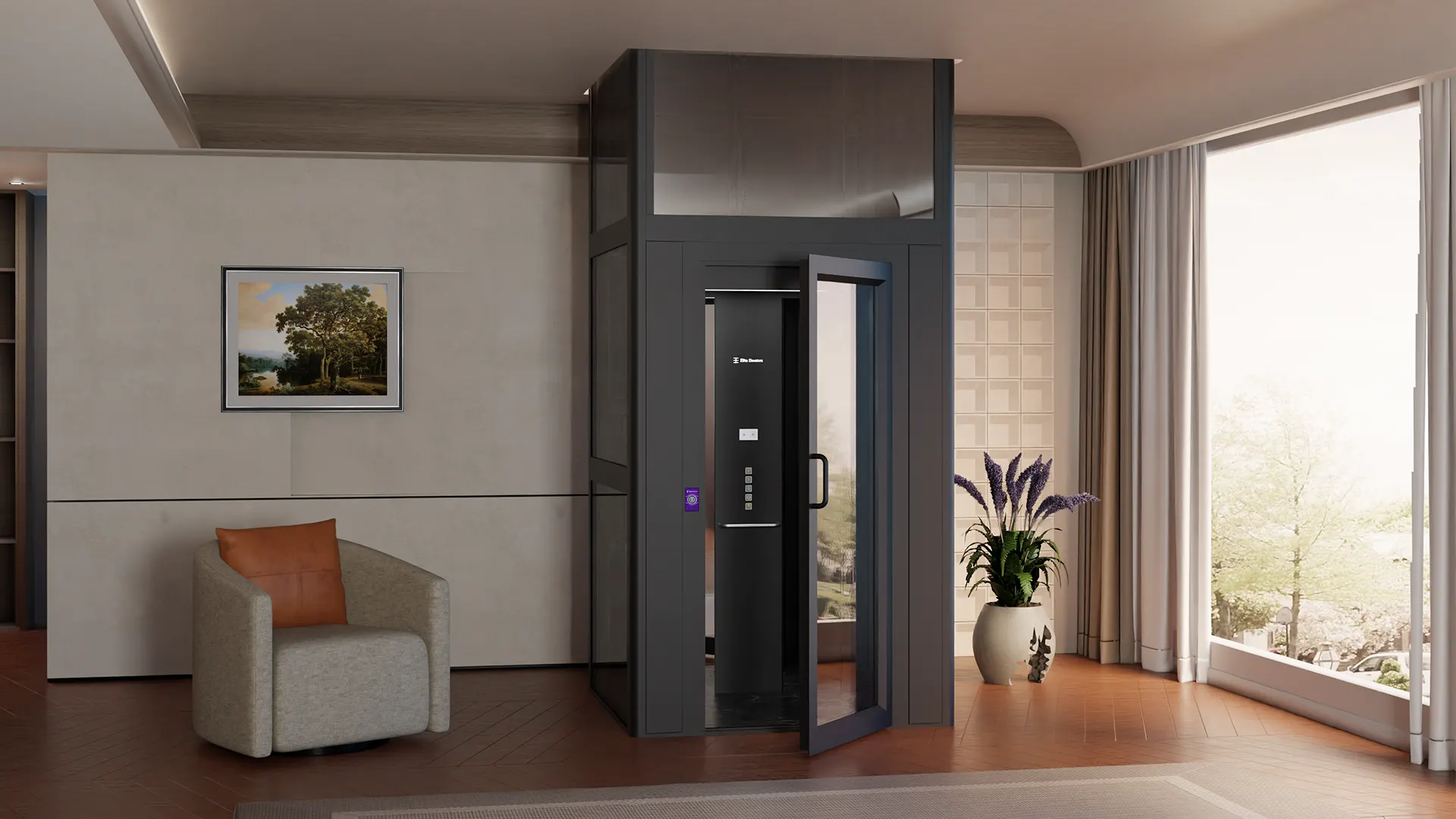
A frequent concern is whether home elevators for an existing house can be integrated without extensive structural demolition. Fortunately, modern engineering allows for seamless installation with minimal disruption to your home’s integrity.
Why are modern families opting for residential home lifts?
Home lifts are no longer exclusive to sprawling estates; they are increasingly viewed as a practical investment for modern family life. Homeowners are opting for retrofitted solutions to achieve:
- Enhanced Independence: Empowering residents to navigate their homes without assistance.
- Proactive Safety: Eliminating the risk of falls and overexertion associated with stairs.
- Future-Proofing: Ensuring the home remains functional for a lifetime.
- Property Appreciation: Increasing the market value and desirability of the residence.
Is it technically feasible to install home elevators in a finished house?
The possibility of installation is rarely a matter of guesswork. A professional site assessment evaluates several critical technical factors:
- Spatial Geometry: Identifying optimal placement within or outside the current floor plan.
- Vertical Rise: Determining the number of stops required (typically from G+1 to G+4).
- Structural Integrity: Ensuring the load-bearing capacity of the floors and foundation.
- Electrical Infrastructure: Assessing the home’s current power supply for compatibility.
Which areas of your home are best suited for small home lifts?
Modern small home lifts are designed for extreme spatial efficiency. Even if your home was not originally designed for a lift, several placement strategies can be utilized:
- Stairwell Voids: Utilizing the empty space in the center of a wraparound staircase.
- Closet Stack: Realigning storage spaces on different floors to create a vertical shaft.
- External Installation: Attaching a weather-proof, glass-enclosed shaft to the exterior wall.
- Floor-to-Floor Cutouts: Creating a compact opening in a corner of the living area.
Can you install home lifts without a traditional shaft or pit?
One of the most significant breakthroughs for retrofitting is the shaftless design. These small home lifts are specifically engineered for existing structures because they:
- Eliminate the Pit: Removing the need to excavate the ground floor.
- Require No Machine Room: Housing the drive system within the unit itself.
- Minimize Civil Work: Reducing the need for heavy masonry and construction.
How do you select the home elevators that fit your specific needs?
Selecting the appropriate model requires a balance of lifestyle needs and architectural constraints. Experts typically evaluate:
- The intended number of floors and frequency of daily use.
- The specific needs of the primary users (e.g., wheelchair access vs. standing passengers).
- Noise level preferences and available square footage for small home lifts.
What safety protocols protect elderly or mobility-impaired users?
When retrofitting for mobility issues, safety features in home lifts are paramount. Modern residential units include:
- Automatic Rescue Device (ARD): Safely lowering the cabin during power outages.
- Battery Backup: Ensuring continued operation during electrical interruptions.
- Full-Height Sensors: Preventing doors from closing if an obstruction is detected.
- Emergency Communication: Integrated alarms and phones for immediate assistance.
Will the installation of home lifts cause structural damage?
A common misconception is that installing home elevators requires months of destructive construction. With professional planning, the process is streamlined to minimize domestic interference:
- Structural changes are kept to a minimum.
- Flooring damage is avoided through precise engineering.
- Dust-containment and noise-reduction protocols are strictly followed to keep your home livable during the upgrade.
What is the typical timeline for a retrofit project?
The timeline is often much shorter than homeowners anticipate. Generally, the process for installing home lifts follows this schedule:
- Consultation & Design: A few days for measurements and selection.
- Manufacturing: Custom fabrication based on your home’s specifications.
- On-Site Assembly: Typically completed within 2 to 3 weeks.
Are the electricity and maintenance costs of home elevators high?
Modern home elevators are remarkably efficient, often requiring no more power than a standard household appliance. Most systems operate on single-phase power and consume energy only during active movement, ensuring that monthly utility bills remain manageable.
What factors influence the final investment for small home lifts?
The investment varies based on the complexity of the project. Key cost drivers include:
- The number of floors served and the chosen drive technology.
- Cabin size, material finishes, and custom aesthetic features.
- While there is an upfront cost, it provides long-term value through improved safety and property equity.
How does daily life improve after installing home lifts?
The impact is often felt immediately. Beyond the physical relief of avoiding stairs, home lifts restore a sense of dignity and freedom to seniors and provide effortless convenience for daily tasks, such as moving laundry or groceries between floors.
Conclusion: Is a Home Elevator Right for You?
Retrofitting your home with one of our home elevators is a sophisticated solution to a practical problem. It allows you to remain in the home you love while adapting to the changing needs of your family. By choosing the right technology and a professional installation team, you can transform your residence into a future-ready, accessible environment.
Ahmad Firdaus
Very informative article. I was actually considering a home lift for my parents, and this blog answered many of my concerns. Thanks for sharing such clear insights
Nur Aisyah
Good explanation of the different home lift options. I didn’t know there were compact lifts suitable for existing houses. Helpful read!
Lim Wei Jian
This blog made it easier to understand how home lifts can be installed without major renovations. Definitely useful for homeowners like us.
Siti Khadijah
Well-written and easy to follow. Home lifts are becoming more important for multi-storey homes, and this article explains it nicely
Muhammad Aiman
Appreciate the detailed explanation on safety and space requirements. This really helps families planning for long-term comfort.