 Skip to main content
  Add Elite Elevators as preferred


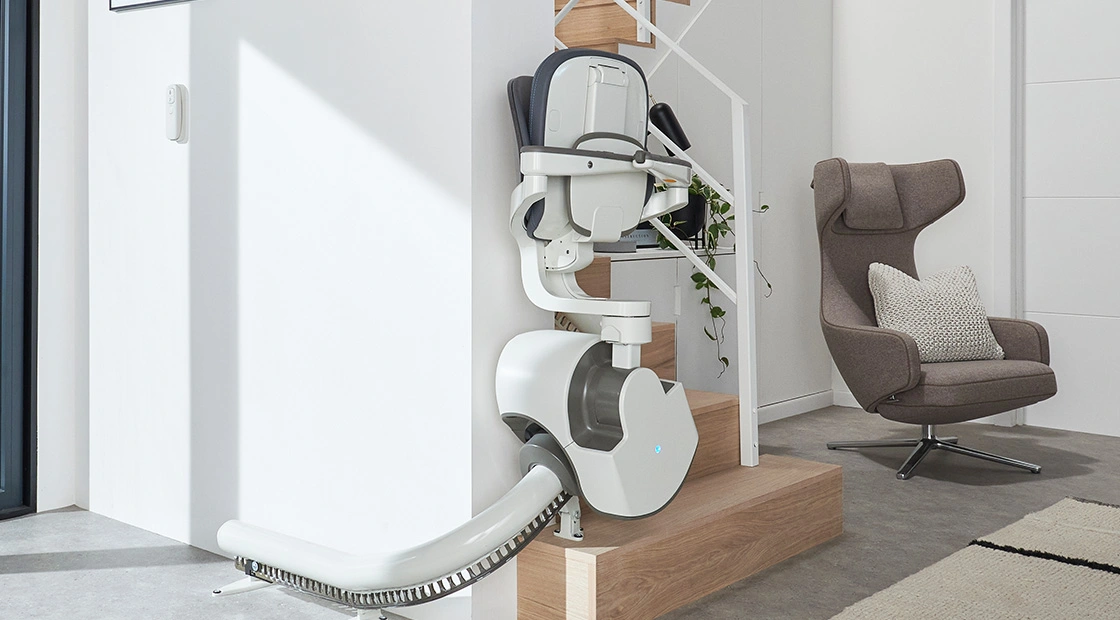
Table of Contents
- Problem 1: The Stairlift Stops Mid-Journey
- Problem 2: The Ride Is Jerky or Rough
- Problem 3: The Stairlift Does Not Fit the Staircase
- Problem 4: The Stairlift Blocks Staircase Access for Others
- Problem 5: Poor After-Sales Support
- Problem 6: Battery Failure Without Warning
- How to Avoid All of These Problems
- Frequently Asked Questions
Stairlifts are one of the most practical home mobility solutions available — particularly for completed Malaysian homes where installing a full elevator shaft is not feasible, and for elderly or limited-mobility family members who need safe staircase access without structural disruption. When they work well, they are seamless. When they do not, they can be a significant source of frustration — and in some cases, a genuine safety concern.
The good news is that most stairlift problems are not random mechanical failures. They are predictable. They have known causes, known warning signs, and — most importantly — known prevention strategies. This guide covers the most common stairlift problems in Malaysia, what causes them, and how to avoid them through better product selection and maintenance.
Problem 1: The Stairlift Stops Mid-Journey
An unexpected stop mid-journey is the most alarming stairlift experience — and the most common complaint in the Malaysian market. It happens for several reasons. The most frequent cause is an obstruction sensor activation: something on the staircase — a bag, a shoe, a pet — has been detected by the lift’s safety sensors, which are designed to stop the lift if anything is in the rail path. This is the safety system working correctly. The solution is a clear staircase.
A less benign cause is a power interruption. Stairlifts that do not include a battery backup system stop immediately when mains power is cut — leaving the passenger stranded on the staircase in whatever position the seat occupied at the moment of the outage. Elite’s E50 Stairlift includes continuous battery operation: the battery stays charged during normal use and keeps the lift running during power interruptions, so a passenger is never left mid-staircase because the power went out.
Problem 2: The Ride Is Jerky or Rough
A rough, jerky stairlift ride is both uncomfortable and — for elderly or post-surgery passengers who may have balance sensitivities — a real safety concern. The most common cause is rail contamination: dust, pet hair, or moisture accumulating on the rail surface and interfering with the drive mechanism’s smooth travel. In Malaysia’s humid climate, this is a genuine concern that accelerates without proper maintenance.
The solution is twofold: regular rail cleaning as part of routine maintenance, and product selection that reduces the sensitivity of the drive mechanism to minor rail contamination. Elite’s E50 uses Advanced Swivel and Levelling (ASL) technology, which is specifically engineered to maintain smooth, stable travel across staircase geometry variations and minor surface irregularities. The result is what Elite describes as the same noise level as a microwave oven — not a mechanical whir, not a vibration, just smooth, predictable motion.
Problem 3: The Stairlift Does Not Fit the Staircase
Stairlifts for stairs come in configurations designed for straight, curved, spiral, and narrow staircases — and the wrong configuration is a persistent problem in the Malaysian market. Homeowners who purchase a straight-rail stairlift for a curved staircase, or a wide-track stairlift for a narrow staircase, face either an installation that cannot be completed or a completed installation that creates hazards for other staircase users.
Elite’s E50 is compatible with all staircase types — straight, curved, spiral, and narrow (as narrow as 610 mm) — and the rail configuration is custom-fabricated to the specific geometry of your staircase, not adapted from a generic template. Chairlifts for stairs that use factory-bent standard curves produce less precise fits than site-measured custom rails, which affects both travel smoothness and the clearance available for other staircase users.
Problem 4: The Stairlift Blocks Staircase Access for Others
A stairlift that renders the staircase unusable for family members who do not need it creates a new household problem in solving the original one. This is a design and specification issue, not an inevitable trade-off. The seat, footrest, and armrests of a well-designed stairlift should fold completely when not in use, leaving enough clear staircase width for other users to pass safely.
The E50’s foldable seat and footrest are designed specifically to preserve staircase usability for non-lift users. On a standard Malaysian staircase, the folded E50 leaves adequate passage width for family members to use the stairs normally alongside it. Confirming folded clearance dimensions against your specific staircase width during the site survey — not the brochure — is essential before any stairlift purchase.
Problem 5: Poor After-Sales Support
This is the problem that appears most often in stairlift complaints across Malaysia — and it is the one most easily avoided through supplier selection rather than product features. Stairlifts in Malaysia are sold by a range of suppliers, from dedicated residential elevator companies to general mobility equipment dealers. The difference in after-sales experience between a specialist residential elevator company and a generic mobility dealer can be enormous.
Elite Elevators Malaysia backs the E50 with the same year-round customer support, trained service technicians, and dedicated helpline that covers its full residential elevator range. Annual service visits, rapid response to fault calls, and genuine technical knowledge from installation experience — not just service manuals — protect the stairlift investment and ensure the product continues performing at its installed standard throughout its working life.
Problem 6: Battery Failure Without Warning
Stairlifts in Malaysia that run on battery power — which is the standard for continuous-charge models like the E50 — require battery condition monitoring as part of routine maintenance. A battery that is not inspected periodically can fail suddenly, leaving the stairlift inoperable. The failure often occurs precisely when the lift is needed most — during a power outage, when the battery should be the backup.
The E50’s battery condition is checked as a standard item during Elite’s annual service visits. Battery replacement is scheduled proactively when condition monitoring indicates deterioration — not reactively when the battery fails. This is the difference between planned maintenance and an unexpected breakdown, and it is entirely in the control of the homeowner and their choice of service provider.
How to Avoid All of These Problems
The common thread across every stairlift problem listed above is preventability. Every one of them is either a product specification issue (wrong stairlift type for the staircase, no battery backup, poor fold-down clearance) or a maintenance issue (no regular service, no battery monitoring, no rail cleaning). Both are addressed through the same two decisions: choosing the right product from a reputable manufacturer, and committing to the annual professional service programme.
The E50 Stairlift from Elite Elevators Malaysia was designed in Germany and manufactured in the Netherlands to address precisely these failure modes. ASL technology for smooth travel. Custom-fabricated rails for any staircase geometry. Continuous battery charging for power outage resilience. Fully foldable seat and footrest. Seven integrated safety layers. And year-round Elite support that treats the stairlift with the same seriousness as any product in the residential elevator range.
Frequently Asked Questions
1. Why does my stairlift keep stopping on the rail?
The most common causes are obstruction sensor activation (something on the staircase triggering the safety sensors), rail contamination causing drive irregularity, or a power supply issue. Check the staircase for any objects that might trigger the obstruction sensor. If the stops persist with a clear staircase, contact your service provider for a diagnostic visit — do not attempt to override safety sensors manually.
2. Can a stairlift be installed on a curved staircase in Malaysia?
Yes. Elite’s E50 Stairlift is compatible with straight, curved, spiral, and narrow staircases. The rail is custom-fabricated to the specific geometry of your staircase rather than adapted from standard curved templates. A site survey from Elite confirms the exact configuration required and provides precise installation dimensions.
3. How long does a stairlift last in Malaysia?
A well-maintained stairlift has a working life of 10 to 15 years. Annual professional servicing — including rail inspection, battery condition check, safety system testing, and mechanical lubrication — extends the life significantly and catches potential faults before they become failures. Elite Elevators Malaysia’s annual maintenance programme covers all of these elements as a standard service visit scope.
4. Does a stairlift block the staircase for other family members?
A properly specified stairlift should not block staircase access for other users when folded. The E50’s seat, armrests, and footrest fold completely when not in use, preserving adequate staircase clearance for other household members. Confirming folded clearance dimensions against your specific staircase width during a site survey ensures compatibility before installation.
5. What is the difference between a stairlift and a home elevator?
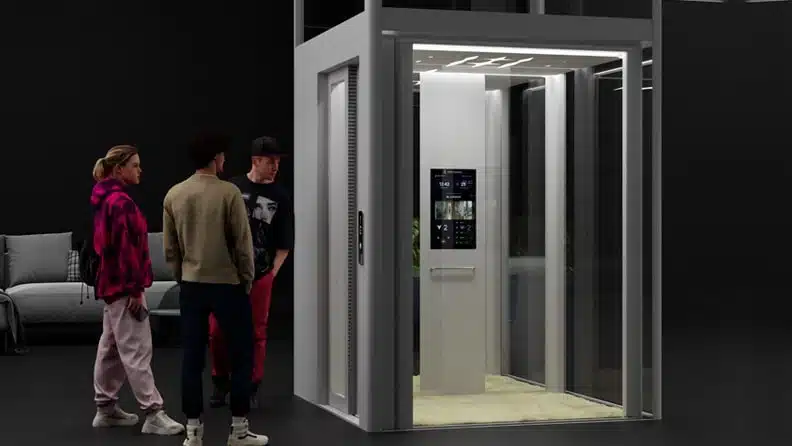
A stairlift mounts on the staircase itself and carries a single seated passenger along the rail — no shaft, no pit, no civil works required. A home elevator carries passengers in an enclosed cabin between floors using a dedicated shaft. Stairlifts are the lower-cost, lower-disruption option. Home elevators provide full cabin access, higher load capacity, and the ability to carry mobility equipment like wheelchairs. Both are available from Elite Elevators, and a site survey will confirm which is the better fit for your specific home.
Nur Shahirah
Very helpful article. I liked the straightforward explanation and the useful information for homeowners.
Syed Danish
Good and informative guide. The points mentioned are useful for anyone considering a residential elevator.
Anis Syuhada
This article is easy to follow and provides useful information. I learned several things that I had not considered before.
Izzat Haziq
Good article. I found the explanation helpful, especially for someone who is researching home lifts for the first time.
Tengku Faris
Helpful and informative content. I found the practical considerations particularly useful when thinking about a residential lift.
Adriana Husna
I found this guide very helpful. The information is presented in a clear and organised way.