 Skip to main content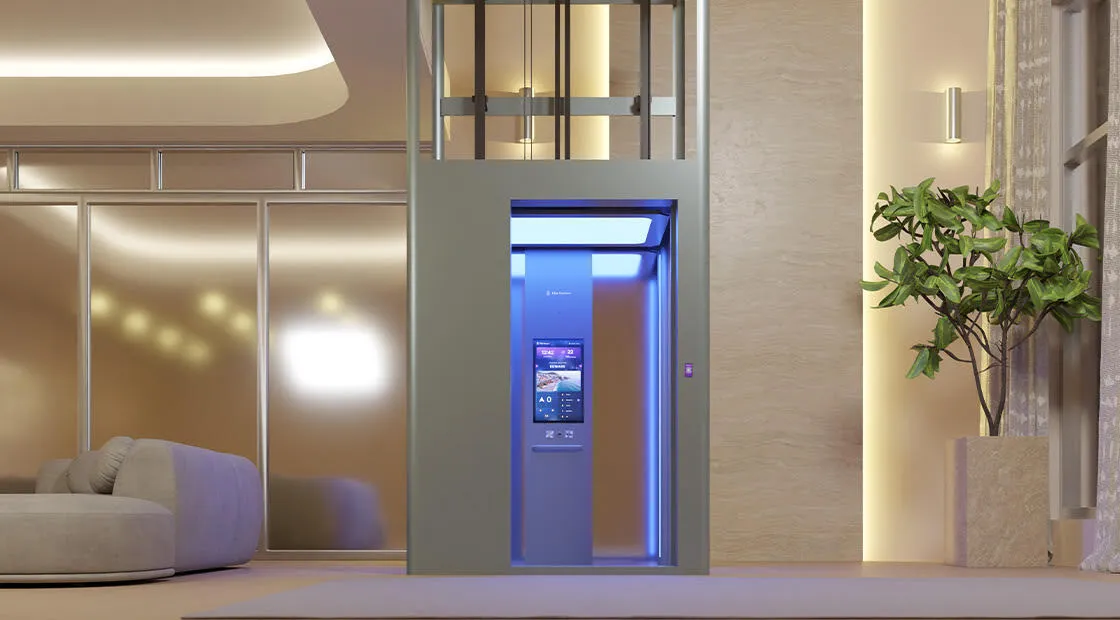
Wheelchair-Friendly Home Elevators
A wheelchair-friendly home elevator does not begin and end with a wider cabin. It is a complete design philosophy — one that considers entry, movement, control access, floor alignment, door clearance, and the passenger experience of every person who will ever use the lift, regardless of their mobility equipment or physical capability. Elite Elevators Malaysia designs its residential elevator range with multi-generational, multi-ability household use as the foundational brief — not as an accessibility add-on applied after the core product is designed. Every Elite elevator is wheelchair-accessible by design, not by modification.
How Wheelchair-Friendly Design Works in a Home Elevator
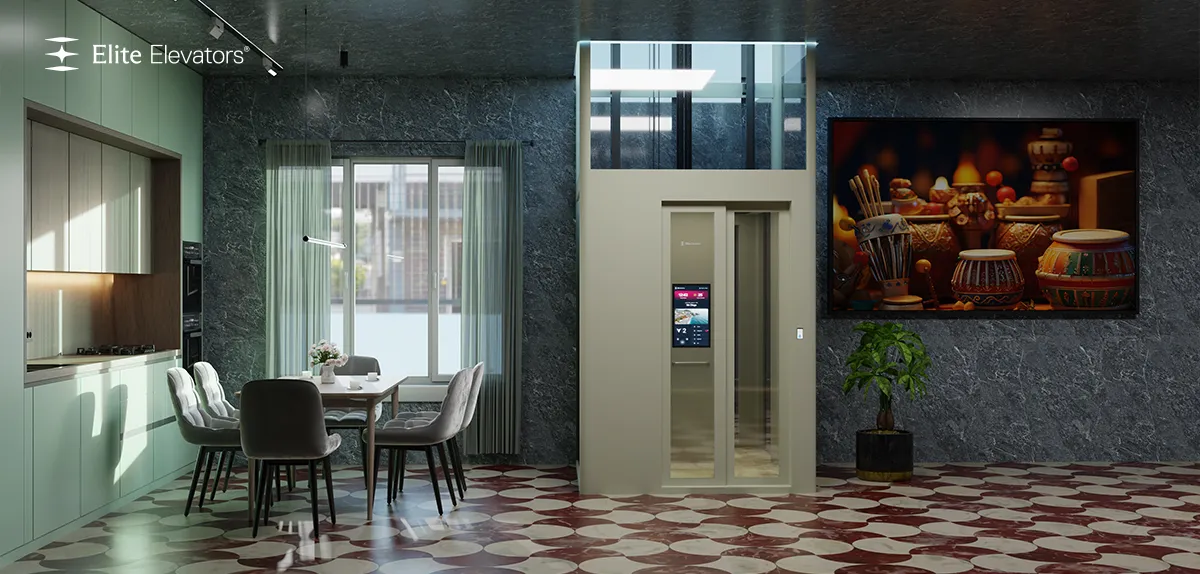
Wheelchair accessibility in a home elevator is determined by the interaction of five key engineering decisions: cabin dimensions, door opening width and type, floor levelling precision, control panel positioning, and turning radius accommodation. Elite's cabin options address all five simultaneously. The standard cabin across the X200, X200 Plus, and E200 at 1400 x 1200 mm meets the minimum recommended wheelchair-accessible dimension for a user with attendant. The X400 and X400 Mark II's XL cabin at 1500 x 1500 mm — the world's largest residential lift cabin — accommodates power wheelchairs with full attendant assistance and room for equipment. Door openings of up to 900 mm ensure even wider-frame wheelchairs can enter without difficulty.

Importance of Wheelchair-Friendly Design in Malaysian Residential Elevators
Malaysia's ageing population and the growing prevalence of multi-generational households mean that wheelchair accessibility in a home elevator is a long-term planning requirement, not just a current need. A family member who currently walks with difficulty may use a wheelchair within five years. A post-surgery recovery period may require temporary wheelchair use. Planning a wheelchair-accessible elevator at installation — rather than retrofitting accessibility later — is always the lower-cost, higher-quality outcome. Elite's consultants approach every residential elevator specification with this long-term view, recommending cabin sizes and door configurations that serve the household's future needs, not just its present ones.
Intelligent Control Systems for Accessible Operation
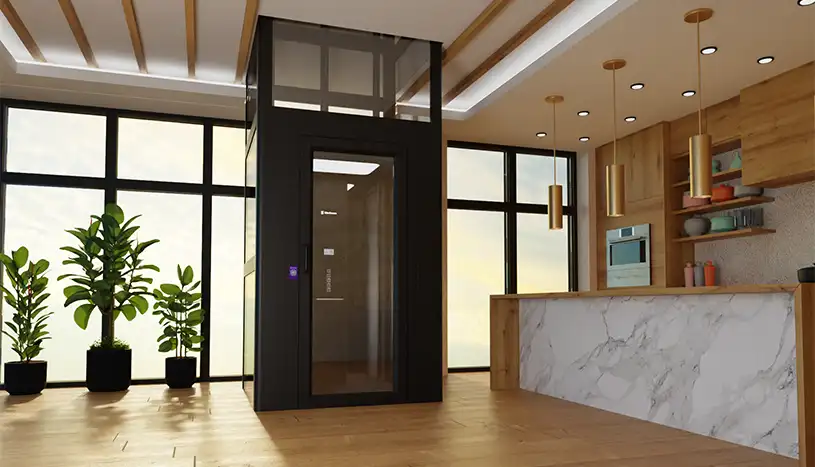
Elite's control logic is designed with accessibility in mind at every operational level. The Comfort Mode on the X400 and X400 Mark II slows travel speed, keeps cabin lights at full brightness, and opens doors at a pace comfortable for passengers with mobility equipment — without requiring any manual mode selection after initial configuration. The X200 Plus's smart touch cabin controls are positioned at heights and angles accessible from a seated position. And on all Elite models, door timing is configurable to remain open longer than standard — accommodating the additional time wheelchair users require for safe entry and exit at each floor.
Wheelchair Accessibility During Power Outages and Emergencies
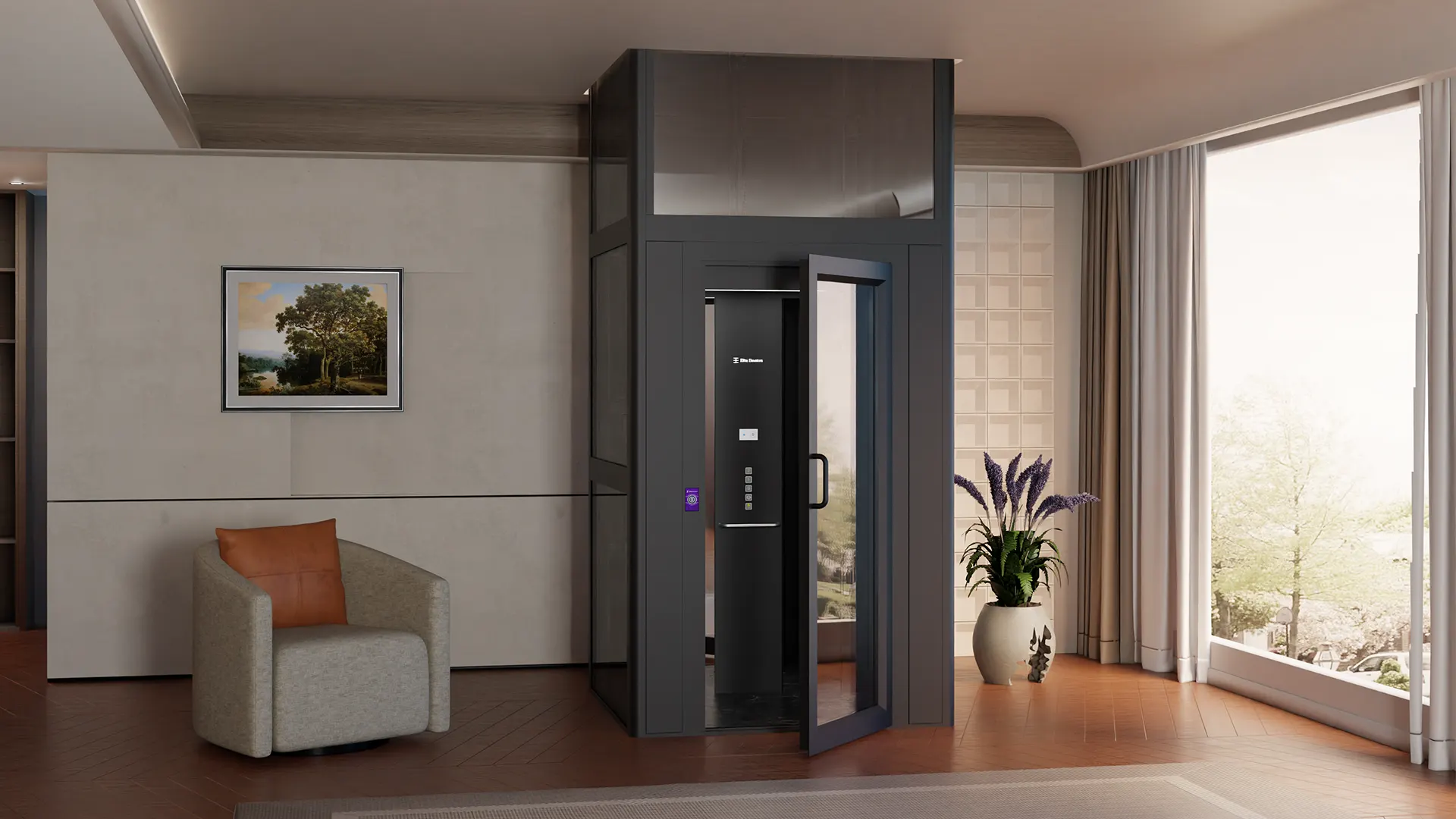
For wheelchair users, a power outage scenario inside a home elevator is particularly sensitive. Elite's ARD system is designed to lower a fully loaded cabin — including a heavy power wheelchair and passenger — to the nearest floor safely and open the doors fully, providing a level exit surface for wheelchair egress. The emergency communication system's two-way intercom and automatic Live SOS activation on smart models ensures that a wheelchair user who may be unable to self-rescue can communicate their situation and receive support immediately. No wheelchair user in an Elite home elevator is ever left without a safe exit and a communication line.
An Integrated Design Approach to Wheelchair Accessibility
Wheelchair-friendly design in Elite's home elevators is the result of several integrated engineering decisions working together:
XL Cabin at 1500 x 1500 mm (X400 / X400 Mark II)
The world's largest residential lift cabin — spacious enough for a power wheelchair, a full-size attendant, and supporting equipment simultaneously. No power wheelchair user in Malaysia needs to compromise on space inside an Elite cabin.
Auto Re-Levelling for Flush Entry and Exit
Elite's auto re-levelling technology ensures the cabin floor aligns precisely with each landing on arrival — every time. The zero-step, flush entry surface allows wheelchair users to roll in and out smoothly without negotiating a gap, a lip, or a raised edge. This precision is calibrated and verified during commissioning on every installation.
Biometric and Voice Access (X400 Mark II)
The X400 Mark II's fingerprint biometric access is positioned at a height accessible from a seated wheelchair position. Voice command capability provides an additional access method for wheelchair users with limited upper limb mobility. No manual button-pressing is required to operate the lift — the elevator responds to the passenger's presence.
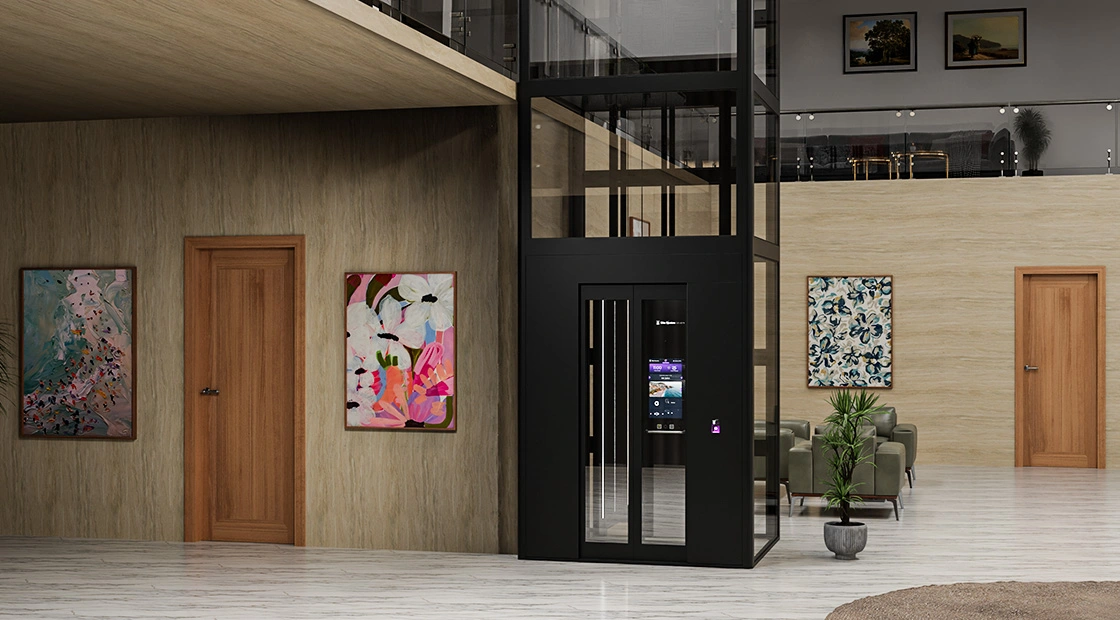
Who Benefits from Wheelchair-Friendly Home Elevator Design?
Wheelchair-friendly elevator design benefits a wider household population than the immediate wheelchair user. The wheelchair user themselves — whether using a manual or power chair — benefits from a cabin sized for genuine comfort, doors wide enough for unassisted entry, auto re-levelling that eliminates every trip hazard, and control systems accessible without standing. Their attendants and caregivers benefit from a cabin with enough space to assist safely without physical strain. Family members who do not currently use a wheelchair benefit from the forward-planning value: a cabin and door specification that accommodates future mobility changes means the elevator does not need to be replaced when circumstances change. Households with elderly members benefit from a design approach that treats slow, careful movement as the norm rather than the exception. And for any Malaysian homeowner considering the resale value of their property, a wheelchair-accessible home elevator is an increasingly recognised feature in a market where accessible homes command a meaningful premium.
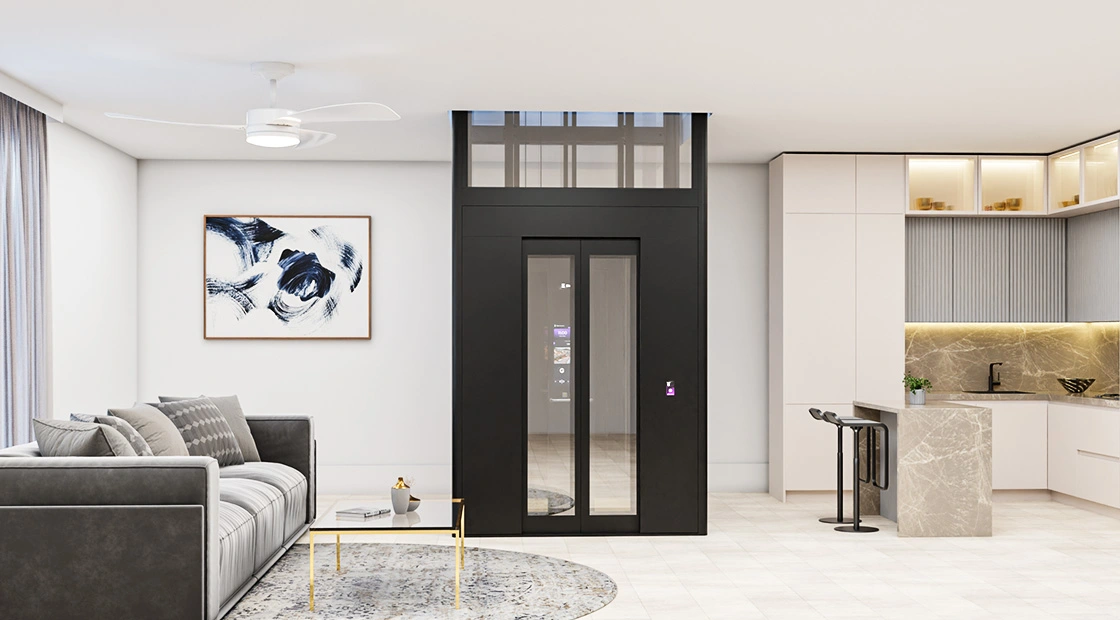
How Wheelchair-Friendly Design Works in a Home Elevator?
Wheelchair accessibility in a residential elevator is the product of five specific engineering decisions working together rather than any single feature. First, cabin dimensions: the minimum recommended clear internal space for a wheelchair user with attendant is 1100 x 1400 mm — Elite's standard cabin at 1400 x 1200 mm meets this, and the X400 and X400 Mark II's XL cabin at 1500 x 1500 mm exceeds it substantially. Second, door opening width: door clearances of up to 900 mm allow even wider-frame power wheelchairs to enter without sideways negotiation. Third, auto re-levelling: Elite's precision floor alignment system ensures the cabin arrives flush with each landing surface on every stop — the zero-step entry surface wheelchair users require is maintained automatically, not dependent on manual calibration. Fourth, control accessibility: panel positioning at heights reachable from a seated position, biometric fingerprint access at wheelchair-accessible height on the X400 Mark II, and voice command capability for users with limited upper limb mobility. Fifth, door timing: door open duration is configurable to remain open longer than standard, accommodating the additional time wheelchair users need for safe entry and exit at each floor.
Frequently Asked Questions
1. What is the minimum cabin size for wheelchair access in a Malaysian home elevator?
The minimum recommended cabin dimension for a wheelchair user with an attendant is approximately 1100 x 1400 mm. Elite's standard cabin at 1400 x 1200 mm (X200, X200 Plus, E200) meets this comfortably. For power wheelchairs or larger mobility equipment, the X400 and X400 Mark II XL cabin at 1500 x 1500 mm is the recommended configuration. Always confirm against the specific wheelchair model in use — dimensions vary significantly between manual and powered models.
2. Do Elite home elevators comply with wheelchair accessibility standards?
Yes. All Elite home elevators are certified to EN 81-41 at minimum, with the X400 Mark II meeting EN 81-20 and EN 81-50. European residential elevator safety standards address passenger diversity including mobility-impaired users. Elite's installation team assesses cabin size, door width, landing space, and control panel height during the site survey to ensure every installation meets the specific requirements of the wheelchair user it will serve.
3. Can a home elevator be retrofitted for wheelchair access in an existing Malaysian home?
Yes — and this is one of Elite's most common retrofit scenarios. The key consideration is cabin size: if an existing cabin is too small for wheelchair access, a product upgrade is typically required. For new retrofit installations, Elite's engineers will assess the available shaft footprint and recommend the largest viable cabin configuration from the outset. Contact Elite Elevators Malaysia at www.eliteelevators.my to arrange a site survey and wheelchair accessibility assessment.