 Skip to main content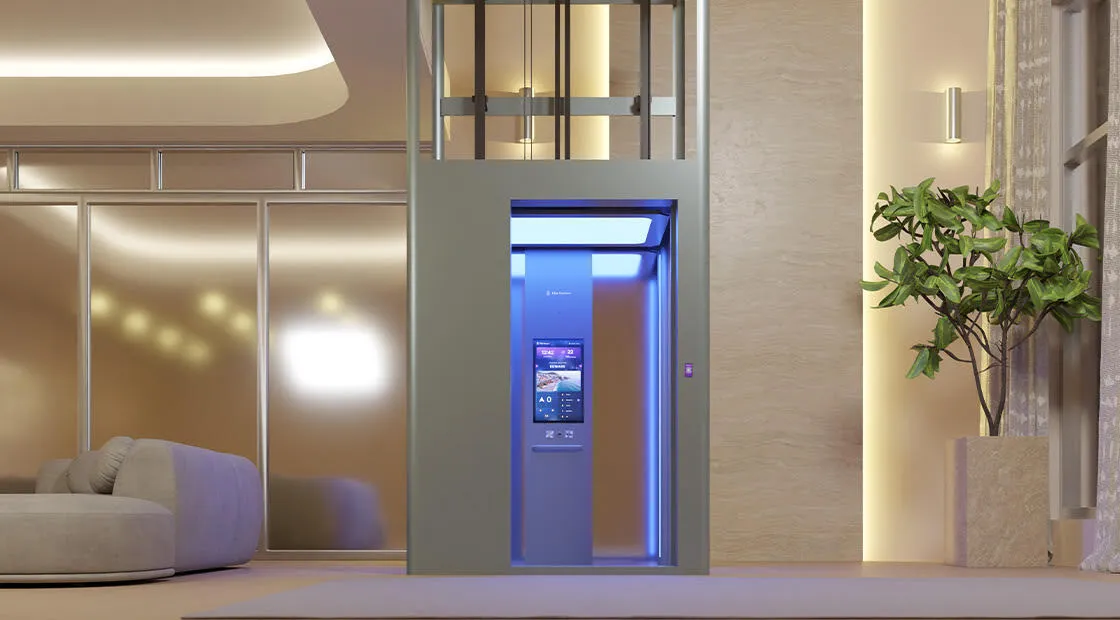
No Machine Room Needed
The machine room requirement was, for decades, one of the biggest practical barriers to installing a home elevator in a Malaysian residential property. A dedicated space above or alongside the elevator shaft — typically one to two square metres — had to be permanently allocated to house the drive motor, control panel, and hydraulic or mechanical equipment. In a Malaysian home where every square metre of living space is valuable, this structural commitment represented a significant sacrifice. Elite Elevators Malaysia's home elevator range eliminates this requirement entirely. No machine room is needed — on any product in the range. The drive systems and controls are integrated into the elevator's own structural envelope, returning that space to the home.
How Machine-Room-Less Design Works
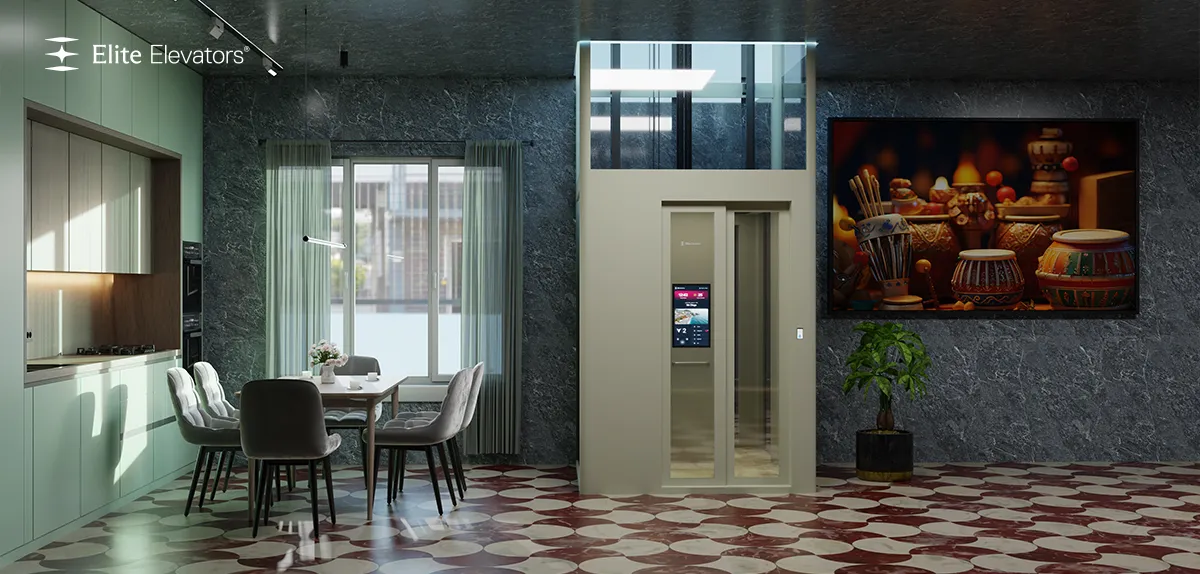
Conventional elevator systems required a machine room because the drive motor, gearbox, and control equipment were too large, too heavy, and too hot-running to be integrated into the elevator shaft structure. Modern residential elevator engineering has solved all three constraints. Elite's hydraulic drive systems (X200, X200 Plus, E200) house the hydraulic pump unit, control valve, and fluid reservoir within a compact integrated unit mounted within the elevator's self-supporting aluminium frame. The gearless belt drive in the X400 and X400 Mark II and the cogbelt drive in the E300 are compact, low-heat-generating systems that fit within the shaft structure without requiring any additional space. The result is a complete elevator system that contains every mechanical and electrical component within the footprint of the shaft itself.

Importance of No Machine Room Design for Malaysian Homes
In Malaysian residential construction, ceiling heights, floor plans, and roof structures are rarely designed with a dedicated machine room in mind. Retrofitting a machine room into a completed home — or allocating one in a new build — requires either permanent loss of usable space or structural modification that may not be feasible within the existing building fabric. Machine-room-less design removes this constraint entirely, making home elevator installation practical across a far wider range of Malaysian property types: terrace houses with tight floor plans, bungalows where roof space is used for other purposes, multi-storey condominiums where management corporation rules restrict structural modifications. Elite's no-machine-room range fits into Malaysian homes as they are — not as they would need to be modified.
Intelligent Control Systems in a Machine-Room-Less Architecture
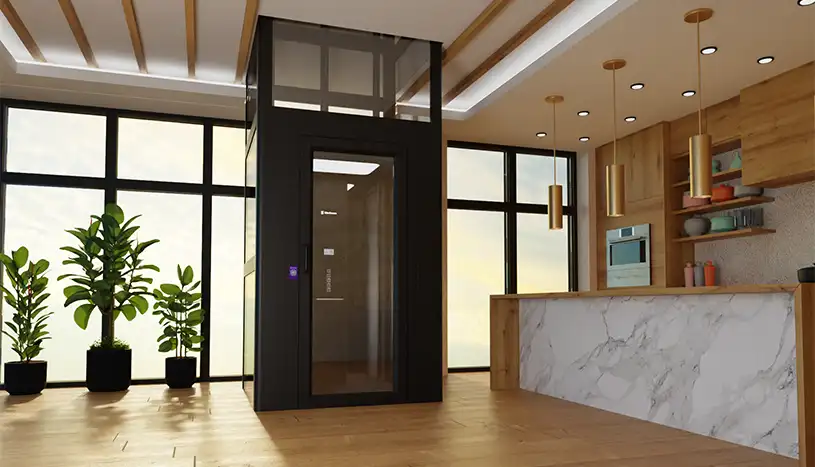
The absence of a machine room does not reduce the sophistication of Elite's elevator control systems. The X400 Mark II's AI-powered control architecture — managing destination prediction, biometric access, Live Board display, VisionLog camera, and remote diagnostics — operates entirely within the elevator's shaft-integrated control hardware. Remote software updates can be delivered over-the-air to the X400 Mark II's control system without any physical access to a machine room or control cabinet. This remote management capability is a direct advantage of Elite's integrated design: updates and diagnostics are performed through network connectivity, not through physical access to distributed hardware.
Machine-Room-Less Design During Power Outages and Emergencies
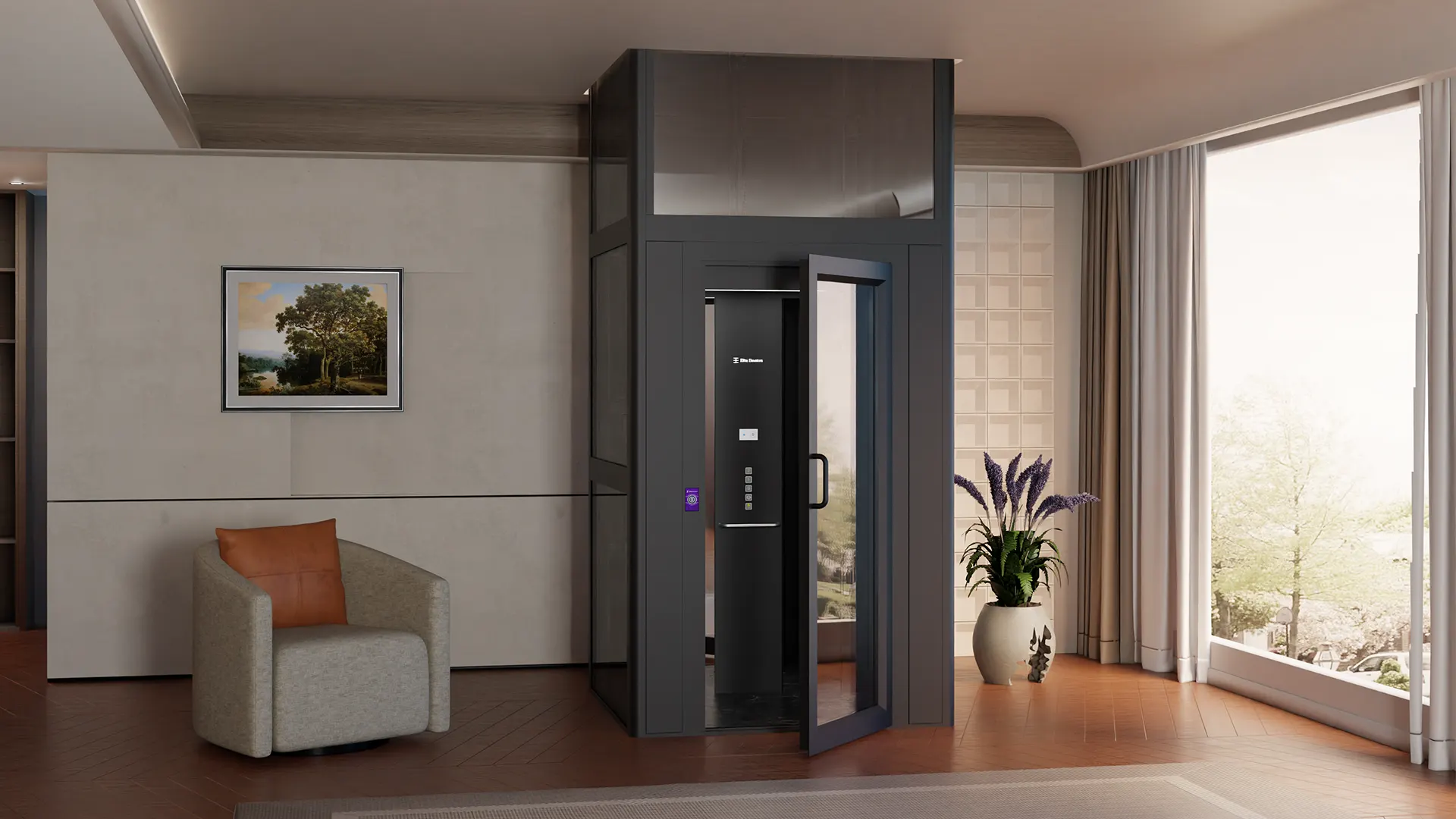
Elite's no-machine-room design simplifies emergency access and response. In a conventional machine-room elevator, emergency procedures sometimes require access to the machine room to manually release the brake or lower the cabin — access that may be restricted, locked, or technically complex for a non-specialist to perform. In Elite's machine-room-less design, all emergency functions — ARD activation, cabin lowering, door opening — are executed automatically by the integrated control and rescue systems without requiring any external access. Passengers are rescued automatically. Emergency communication is handled by the cabin-integrated GSM system. No machine room key, no machine room access, and no specialist knowledge is required from anyone in the household.
An Integrated Engineering Approach to Machine-Room-Less Installation
Elite's no-machine-room design is achieved through three integrated engineering innovations:
Self-Supporting Aluminium Frame Structure
Elite's elevator shaft is a self-supporting aluminium frame that carries all mechanical loads internally — requiring no transfer of load to surrounding walls, ceilings, or the building structure. This frame houses the drive system, rails, and control equipment within its own structural envelope, eliminating the need for any additional machine room space above, below, or alongside the shaft.
Compact Integrated Drive Unit
The hydraulic pump and control unit on the X200, X200 Plus, and E200 are designed as compact integrated assemblies that mount within the shaft frame. The gearless drive motor on the X400 and X400 Mark II and the cogbelt system on the E300 are similarly integrated — each designed specifically for the no-machine-room shaft envelope rather than adapted from systems that originally required additional space.
Control Panel Integrated into Landing Door Frame
The elevator's main control panel is integrated into the landing door frame rather than requiring a separate wall-mounted control cabinet in a machine room. This integration is clean, aesthetically minimal, and eliminates one of the most visually intrusive elements of conventional elevator installations in residential interiors.
Who Benefits from a No Machine Room Home Elevator?
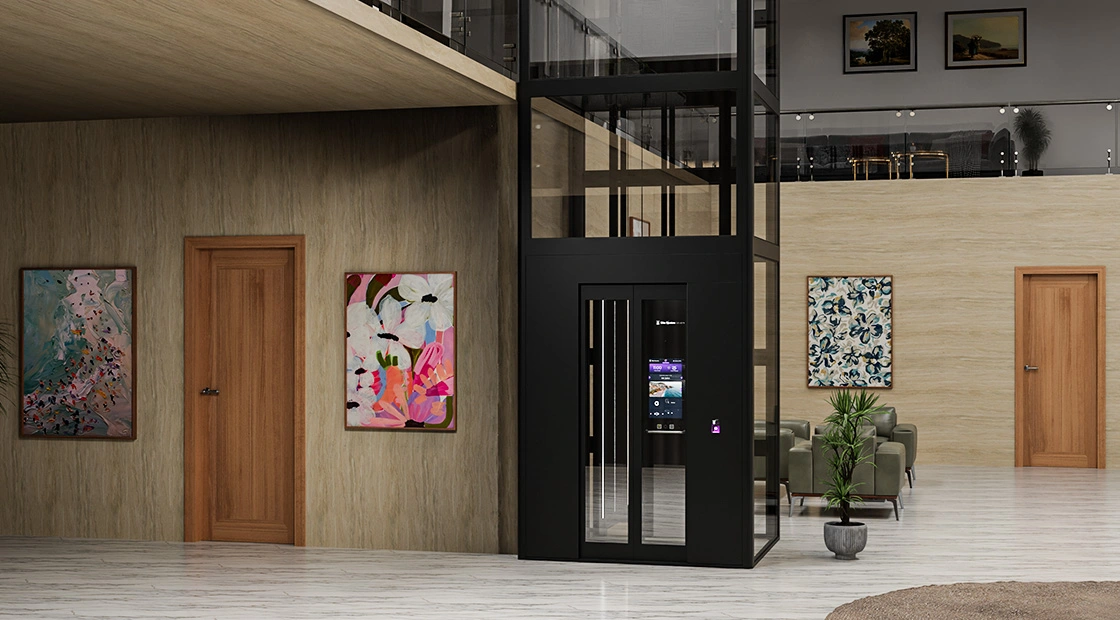
No machine room design benefits every Malaysian homeowner who wants an elevator without sacrificing living space — and in a market where residential floor area is both expensive and finite, that is almost everyone. Homeowners in terrace and semi-detached houses benefit most directly: their floor plans rarely have surplus space for a dedicated machine room, and the no-machine-room design makes elevator installation practically viable in homes where it would otherwise be structurally impossible. Homeowners in bungalows and larger properties benefit from the design flexibility: without a machine room constraint, the elevator shaft can be positioned wherever it serves the household best — near the main staircase, alongside an external wall, or in a courtyard space — rather than wherever a machine room can be accommodated. Retrofit homeowners — those installing a lift into a completed home — benefit from the absence of one of the most disruptive civil works elements of conventional installations. And architects and interior designers working on new Malaysian residential projects benefit from an elevator that can be specified and positioned without compromising the spatial design of the home around it.
How Machine-Room-Less Design Works?
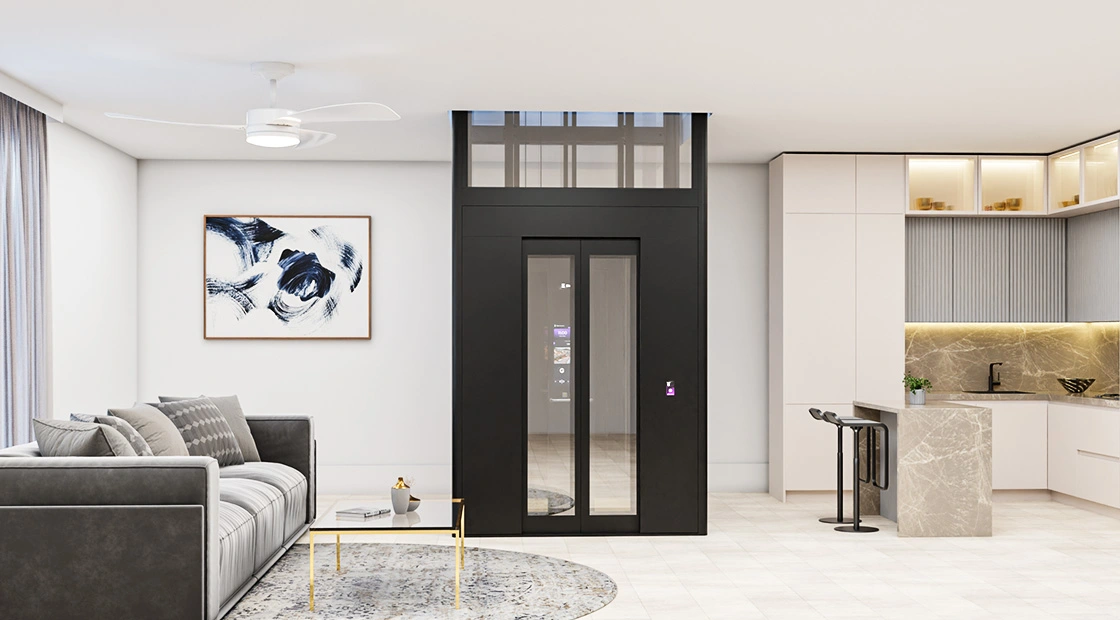
The hydraulic drive unit on the X200, X200 Plus, and E200 — pump, control valve, fluid reservoir, and associated electronics — is designed as a compact integrated assembly that mounts within the self-supporting aluminium frame structure of the elevator shaft, occupying no floor area outside the shaft footprint. The gearless belt drive motor on the X400 and X400 Mark II and the cogbelt drive system on the E300 are low-heat-generating, compact units that integrate directly into the shaft frame at the drive position. The main control panel is integrated into the landing door frame rather than requiring a wall-mounted cabinet in a separate room. The self-supporting aluminium frame carries all mechanical loads internally — requiring no structural transfer to surrounding walls — and contains every mechanical, electrical, and control component within its own envelope. The result is a complete residential elevator system that occupies only the footprint of its shaft across every floor, with no infrastructure requirement above, below, or alongside it.
Frequently Asked Questions — No Machine Room Home Elevators
1. Why do modern home elevators not need a machine room?
Advances in drive motor technology, hydraulic system miniaturisation, and integrated control electronics have made it possible to contain all elevator mechanical and electrical components within the elevator shaft structure itself. Elite's self-supporting aluminium frame design and compact integrated drive units eliminate the need for any external machine room space — returning that area to the home and making installation practical in a far wider range of Malaysian residential properties.
2. Does a machine-room-less elevator compromise on performance or safety?
No. Elite's no-machine-room home elevators carry the same EN 81-41, EN 81-20, and EN 81-50 European safety certifications as any conventional elevator system. Performance specifications — speed, load capacity, travel height, safety system architecture — are identical to what would be expected from a machine-room-equipped system. The absence of a machine room reflects modern engineering efficiency, not a reduction in capability.
3. How does no machine room affect the installation process in an existing Malaysian home?
The absence of a machine room requirement significantly simplifies retrofit installation in completed Malaysian homes. There is no need to allocate, construct, or modify any space outside the elevator shaft footprint. Combined with Elite's shallow 59 (no shaft) to 120 mm pit requirements and self-supporting aluminium frame, a no-machine-room Elite elevator can be installed in most completed Malaysian terrace houses, semi-detached homes, and bungalows within 2 to 3 weeks — with minimal civil works and no structural modification beyond the floor openings at each level.