 Skip to main content
High Load Capacity
When a home elevator is chosen for a multi-generational Malaysian household, load capacity is not a specification to overlook — it is the specification that determines whether the lift genuinely serves every passenger and every use case. A high load capacity home elevator can carry multiple family members simultaneously, accommodate a wheelchair user with a full-size attendant, handle heavy household items between floors, and do all of this without placing any mechanical strain on the drive system. Elite Elevators Malaysia's residential lift range is engineered to deliver rated load performance that meets the real demands of daily household use — not just a laboratory test condition.
How High Load Capacity Works in a Home Elevator
Load capacity in a residential elevator is a function of the drive system's power rating, the structural integrity of the cabin and frame, the braking system's stopping force, and the precision of the overload detection mechanism. In Elite's hydraulic and gearless systems, the load rating is determined by the hydraulic pump pressure capacity (for the X200, X200 Plus, and E200), the belt tension and motor torque (for the X400 and X400 Mark II), or the cogbelt drive specification (for the E300). Each product is rated to its declared load capacity under continuous operating conditions — meaning the lift performs at 400 kg or 440 kg in daily residential use, not just in a single static test.

Importance of High Load Capacity in Malaysian Residential Lifts
Malaysian households are frequently multi-generational — grandparents, parents, and children sharing the same multi-storey home. This creates a usage pattern that combines elderly passenger needs (slower, smoother travel with full safety features), young family convenience (quick multi-floor movement with heavy loads), and practical household logistics (moving furniture, groceries, medical equipment, or mobility devices between levels). A home elevator with insufficient load capacity forces homeowners to compromise on who can travel together, what can be moved, and how the lift integrates into daily life. High load capacity removes these compromises entirely.
An Integrated Engineering Approach to Load Capacity
Elite Elevators Malaysia's high load capacity is not achieved through a single component — it is the result of several integrated engineering systems working in concert:
Rated Drive System Power
The hydraulic pump and motor on the X200 series and E200 are rated to sustain full load operation continuously. The gearless belt and motor system on the X400 and X400 Mark II is spec'd to 440 kg with headroom for operational variation. No drive component operates at the edge of its rated capacity under normal residential use.
Reinforced Cabin Structure
The cabin frame and floor platform are engineered to distribute passengers and load weight evenly across the support points. Structural integrity is verified through the same EN 81-41 (and EN 81-20/EN 81-50 for the X400 Mark II) certification process that covers all safety systems — meaning the cabin structure has been independently load-tested, not just specified.
Smart Overload Detection
All Elite home elevators integrate a smart overload sensor that detects when the total weight inside the cabin exceeds the rated maximum before the cabin begins to move. The lift cannot be operated above its rated load — protecting passengers, the drive system, and the braking mechanism simultaneously.
Intelligent Load Management and Control Logic
Elite's intelligent control systems monitor cabin load in real time throughout every journey — not just at the point of departure. If load distribution shifts during travel in a way that affects cabin stability, the control system responds immediately. The overload sensor is calibrated to the specific rated load of each model, not a generic threshold — meaning the X400 and X400 Mark II's 440 kg rating is enforced with the same precision as the 400 kg rating on the X200 and E200 series. This real-time load intelligence is part of the same control architecture that manages floor levelling, door timing, and emergency rescue — an integrated system, not an isolated feature.
Load Capacity Performance During Power Outages and Emergencies
A fully loaded cabin presents the most demanding scenario for an emergency rescue system. Elite's Automatic Rescue Device (ARD) is designed and tested to lower a cabin at or near its maximum rated load to the nearest floor safely under battery power. The ARD's battery capacity and motor rating account for the maximum load condition — so a cabin carrying 400 or 440 kg during a power outage receives the same safe, controlled rescue sequence as an empty cabin. Passengers never face a situation where the emergency system is unable to rescue them because the cabin is loaded.
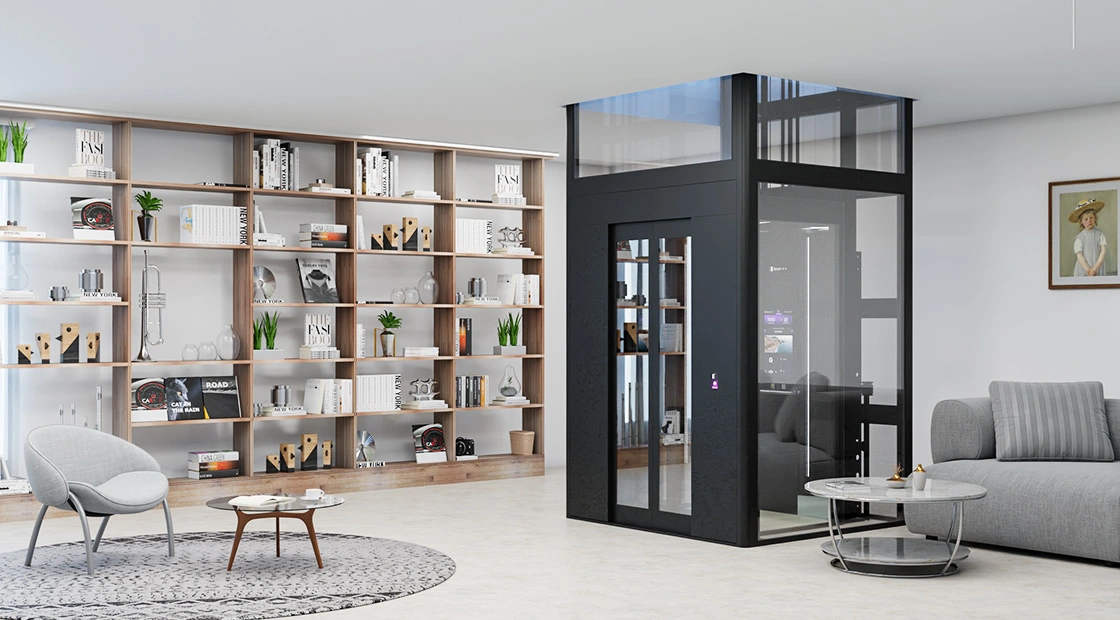
Who Benefits from High Load Capacity in a Home Elevator?
The high load capacity of Elite's residential elevators directly benefits every household profile where carrying multiple passengers or heavy loads between floors is a daily reality. Multi-generational families — where grandparents, parents, and children share the same home — benefit from being able to travel together without calculating who can fit. Wheelchair users and their attendants benefit from a cabin rated to handle both comfortably without approaching the mechanical limit. Homeowners who regularly carry groceries, appliances, or furniture between floors benefit from an elevator that handles these loads as a matter of routine, not as an exceptional case.
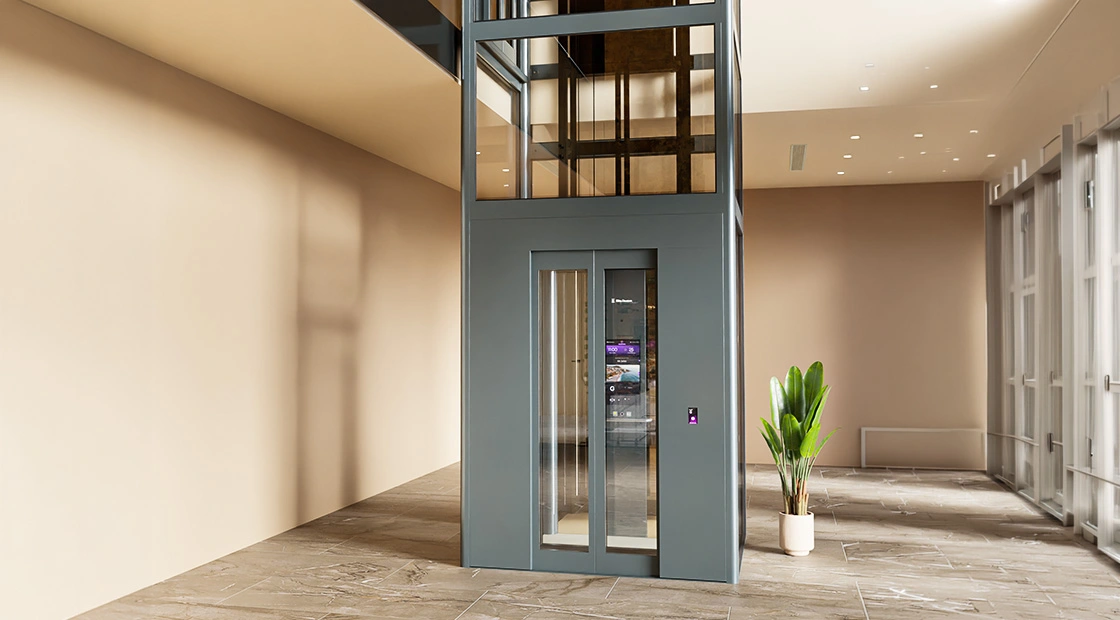
How High Load Capacity Works in a Home Elevator?
Load capacity in a residential elevator is determined by four interacting systems: the drive system's power rating, the structural integrity of the cabin and frame, the braking system's stopping force, and the precision of the overload detection mechanism. Across all models, the load rating is enforced by a precision overload sensor embedded in the cabin floor — the elevator will not depart the floor if the measured cabin weight meets or exceeds the declared maximum. The result is a system where the declared rating is a real operational limit, not a theoretical ceiling.
Frequently Asked Questions — High Load Capacity Home Elevators
1. What is the standard load capacity of a home elevator in Malaysia?
Most residential home elevators in Malaysia are rated between 250 kg and 440 kg. Elite Elevators Malaysia's hydraulic range (X200, X200 Plus, E200, and E300) is rated to 400 kg. The gearless X400 and AI-powered X400 Mark II are rated to 440 kg — among the highest load capacities available in Malaysian residential elevators. All ratings are independently verified under EN 81-41 (and EN 81-20/EN 81-50 for the X400 Mark II) certification.
2. Can a high load capacity home elevator carry a wheelchair and attendant?
Yes. Elite's standard cabin at 1400 x 1200 mm (X200, X200 Plus) comfortably accommodates a wheelchair user with an attendant within the 400 kg rated load. The X400 and X400 Mark II's XL cabin at 1500 x 1500 mm — the world's largest residential lift cabin — provides additional space for larger power wheelchairs and full attendant assistance, all within the 440 kg rated capacity.
3. What happens if someone exceeds the elevator's weight limit?
Elite's smart overload detection system prevents the elevator from operating when the total cabin weight exceeds the rated load. The cabin will not depart the floor, and an indicator alerts the passengers. Once the excess weight is removed, the elevator operates normally. This protection is active on every journey and cannot be bypassed — it is part of the elevator's certified safety architecture under EN 81-41.